Best Muse AI Alternatives in 2026: Only These 3 Qualify

Meta shipped Muse on September 8th, and within about a week the internet had produced roughly nine hundred "best Muse alternatives" listicles. I read a lot of them I realized: Most are junk and SEO advertising posts.

I'll show you which apps are the real alternatives and why in this post.
First, here's the thing Muse does that's kinda different: it's proactive. It messages you first. It remembers what you told it three weeks ago and brings it up when it's relevant. It takes action on your behalf. That's the bar.
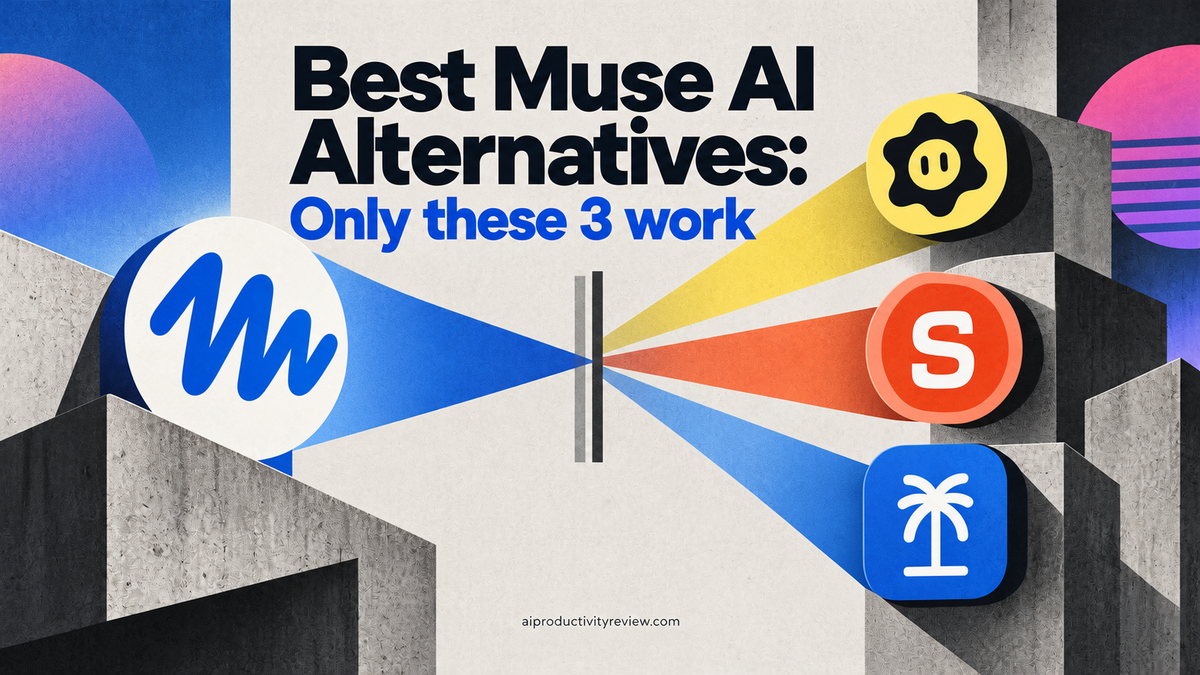
By that bar, three tools qualify: Saner.ai, Tomo, and Poke. That's it. Three.
Quick answer: What are the real Muse AI alternatives?
- Tomo if your problem is follow-through. It's an accountability bot that texts you first and won't let you abandon the thing you said you'd do.
- Poke if your problem is your inbox and calendar, and you want an agent that lives in iMessage so you never open another app.
- Saner.ai if your problem is that your brain is overwhelmed and you want a proactive assistant for work. Braindump in, organized day out.
Who I am and how I tested these tools
I'm Theo Keene. I test these with my own accounts, my own inbox, my own embarrassing 2am voice notes. Pricing is checked against each vendor's current pricing page - not AI search. Methodology lives on the How I Test page: Basically I tested them for weeks in real life workflow and see which ones are actually helpful
What makes something a Muse alternative
Three criteria. A tool in my list hits all three:
- It reaches out first. Not reminders you set. The tool deciding, on its own, that now is when you need to hear about something.
- It remembers you across time. Not session memory. Persistent context that means you don't re-explain your life every Monday.
- It acts on your real accounts. Email, calendar, tasks. Reading and writing, not just describing what you could do if you opened the other app.
Comparison table - Muse AI alternatives
| Saner.ai | Tomo | Poke | |
|---|---|---|---|
| Core strength | Capture and planning | Accountability and habits | Inbox and calendar execution |
| Where it lives | Web, mobile, extension | Text messages | iMessage, SMS, WhatsApp, Telegram |
| Reaches out first | Yes, daily planning | Yes, its whole point | Yes, when something needs attention |
| Acts on others' behalf | Your accounts only | No, personal only | Yes, drafts and sends email |
| Free tier | Yes, full features | Yes, heavily limited | Yes, "Free Forever" |
| Paid from | ~$8/mo (annual) | $19.99/mo | $19/mo ($16 annual) |
What are the best Muse AI alternatives?
Tomo — best for doing the thing you said you'd do

Why it's a real Muse alternative: it is arguably more proactive than Muse.
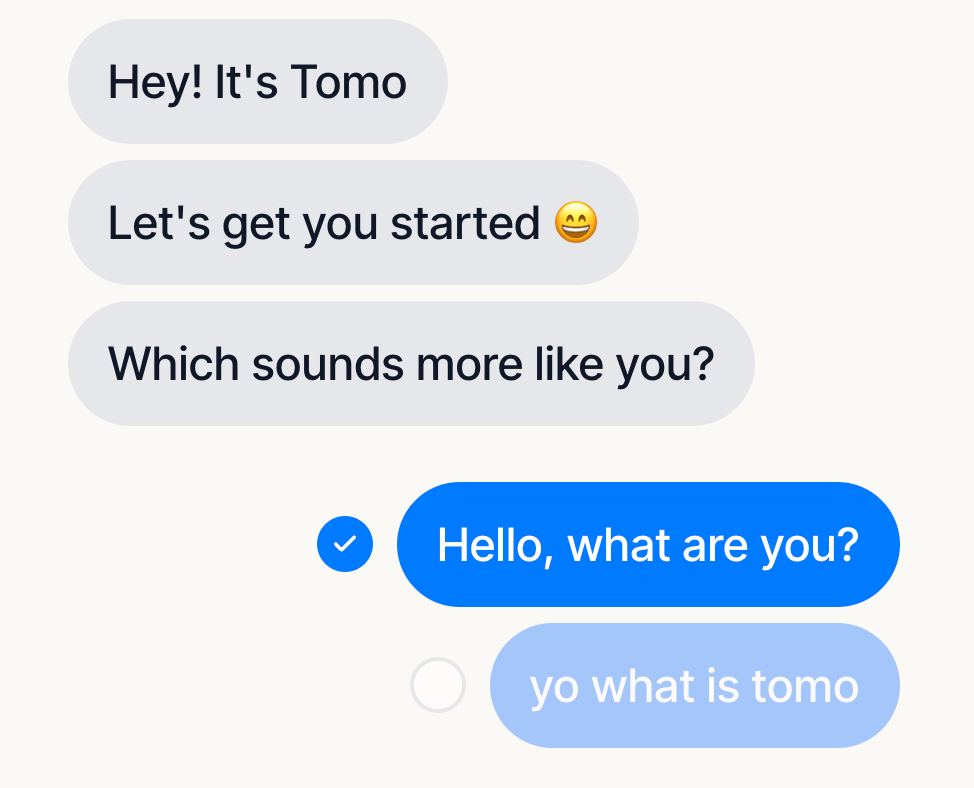
Tomo (from Mapo Labs, out of stealth mid-2026 with a $5M seed led by Bain Capital Ventures) lives in your text messages and functions as an accountability partner rather than an executive assistant. You tell it what you're trying to become, it remembers, and it checks in on its own. It auto-generates trackers for workouts, spending, and streaks without you configuring anything, and connects to your calendar and Gmail for context.
It reached over 10,000 paying customers on word of mouth before any real marketing
Where it's good:
- The proactive check-ins feel like a person texting you, not a push notification.
- Zero-friction input: send it a meal photo, a bank screenshot, a screen-time report, and it works with that
- No app to open, which removes the exact step where most productivity habits die
Where it falls short:
- It's personal-only. It won't email or text other people on your behalf, which is a real gap versus Muse and versus Poke.
- Email and calendar support is shallow and thinly documented compared to what it claims
- The free tier is heavily clipped: a 75-message daily cap and, critically, no proactive texting at all without a subscription
- The company roughly doubled its monthly price at one point
Pricing: Free tier (limited). Paid from $19.99/month.
Best for: People whose systems are fine but whose follow-through isn't. If you have a beautiful task list you routinely ignore, this is your tool
Saner.AI — best for braindump and proactive assistant
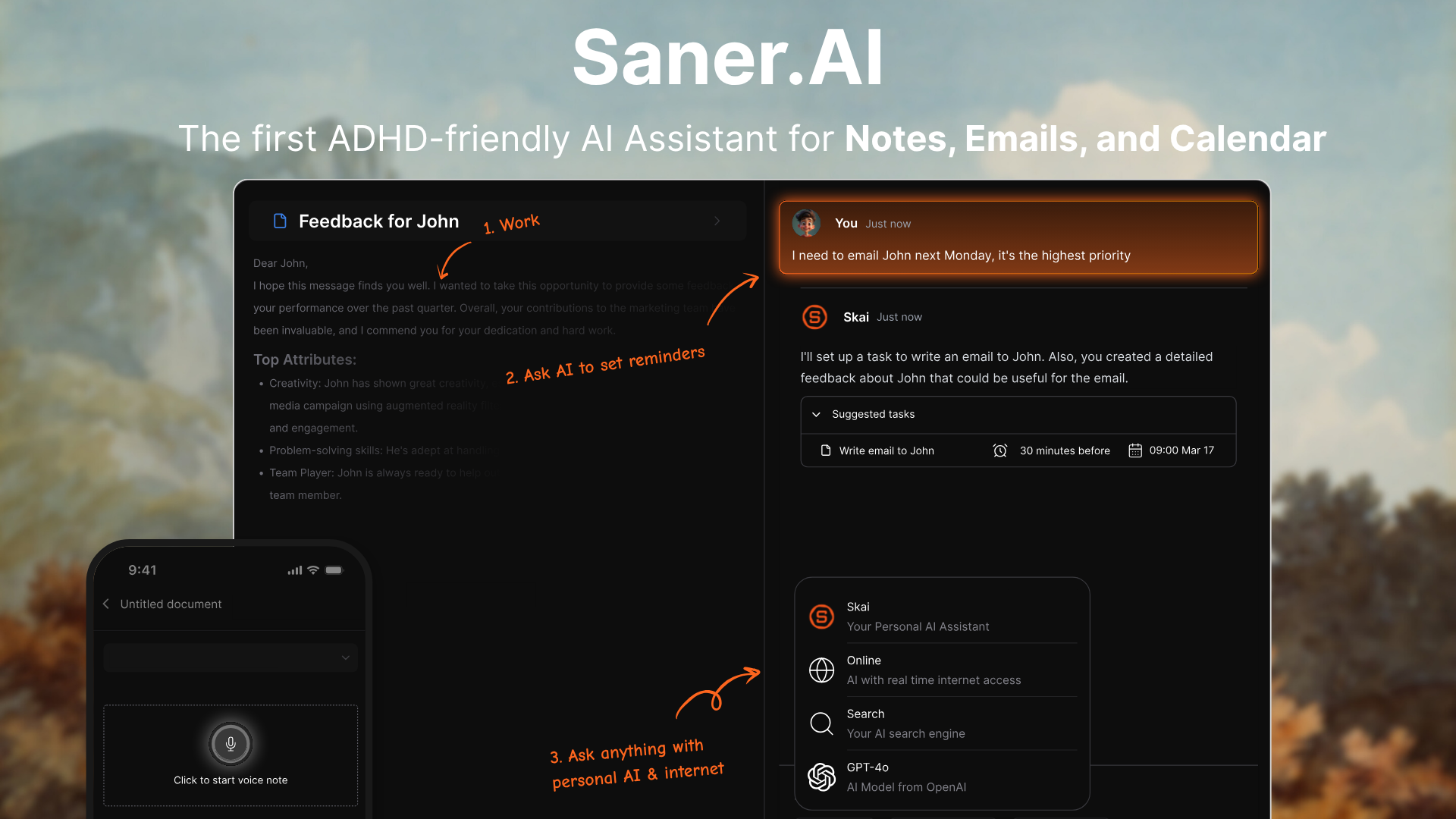
Why it's a real Muse alternative: it hits all three criteria: proactive, has a memory and act on your real account
Saner assumes your problem is that half your commitments never made it out of your head. You dump a voice note, an idea, or label an email, and its assistant (Skai) pulls out the actual tasks, timing, and priority without you organizing anything first. No tagging, no projects, no folder structure
The proactive part is truly helpful: It builds tomorrow from your calendar, your open tasks, and whatever you braindumped last night, so the plan is already there when you wake up. I literally use this every single day and also set up checks in during the day to reflect from times to times
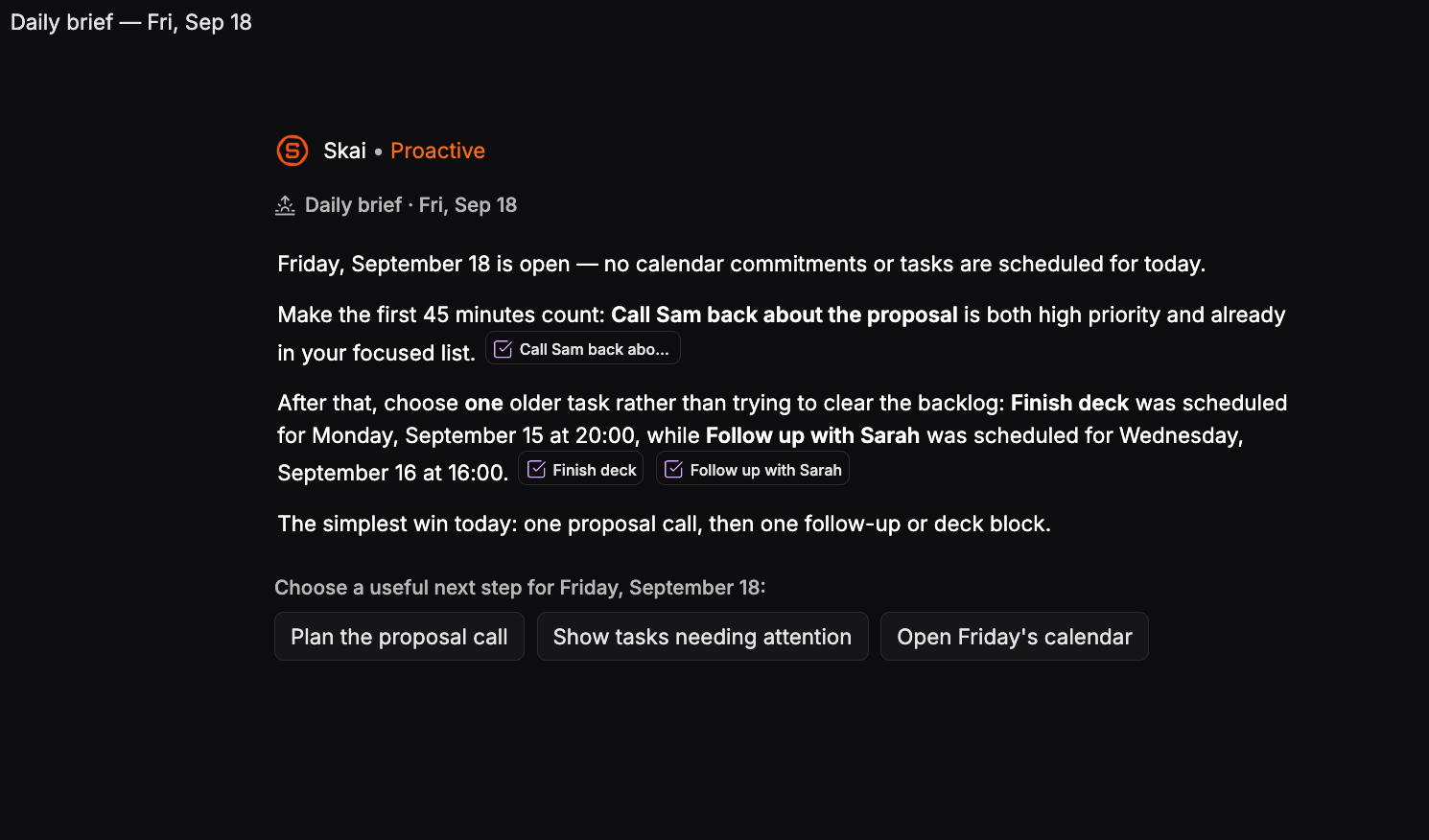
Where it's good:
- Braindump turns unstructured thoughts into an organized task list
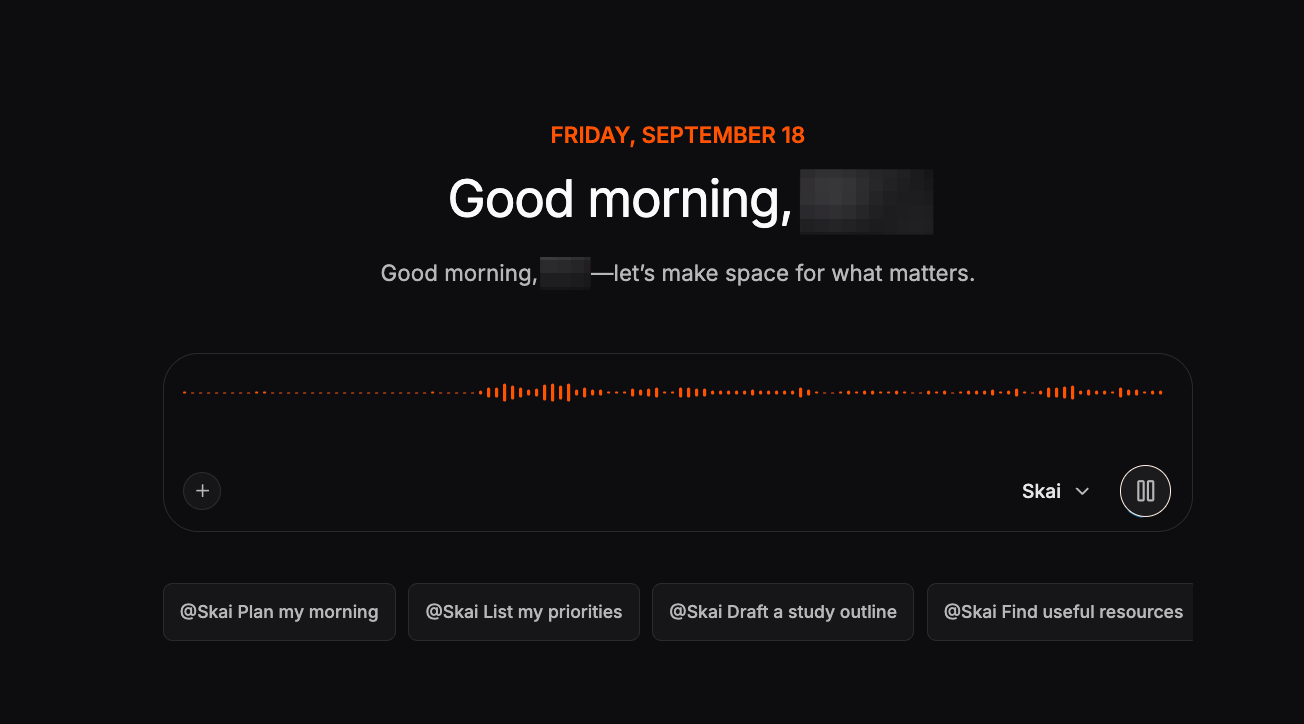
- The Calendar has an built-in AI so I can just talk to reschedule stuff
- Semantic search across notes, emails, and calendar in one place, so you stop playing "which app did I put that in"
Where it falls short:
- Feature breadth still trails mature note tools like Notion or Goole. It's a younger product
- No offline mode
Pricing: Free tier. Starter around $8/month billed annually ($12 monthly). Standard around $16/month billed annually ($20 monthly).
Poke — best for running your inbox from your text thread
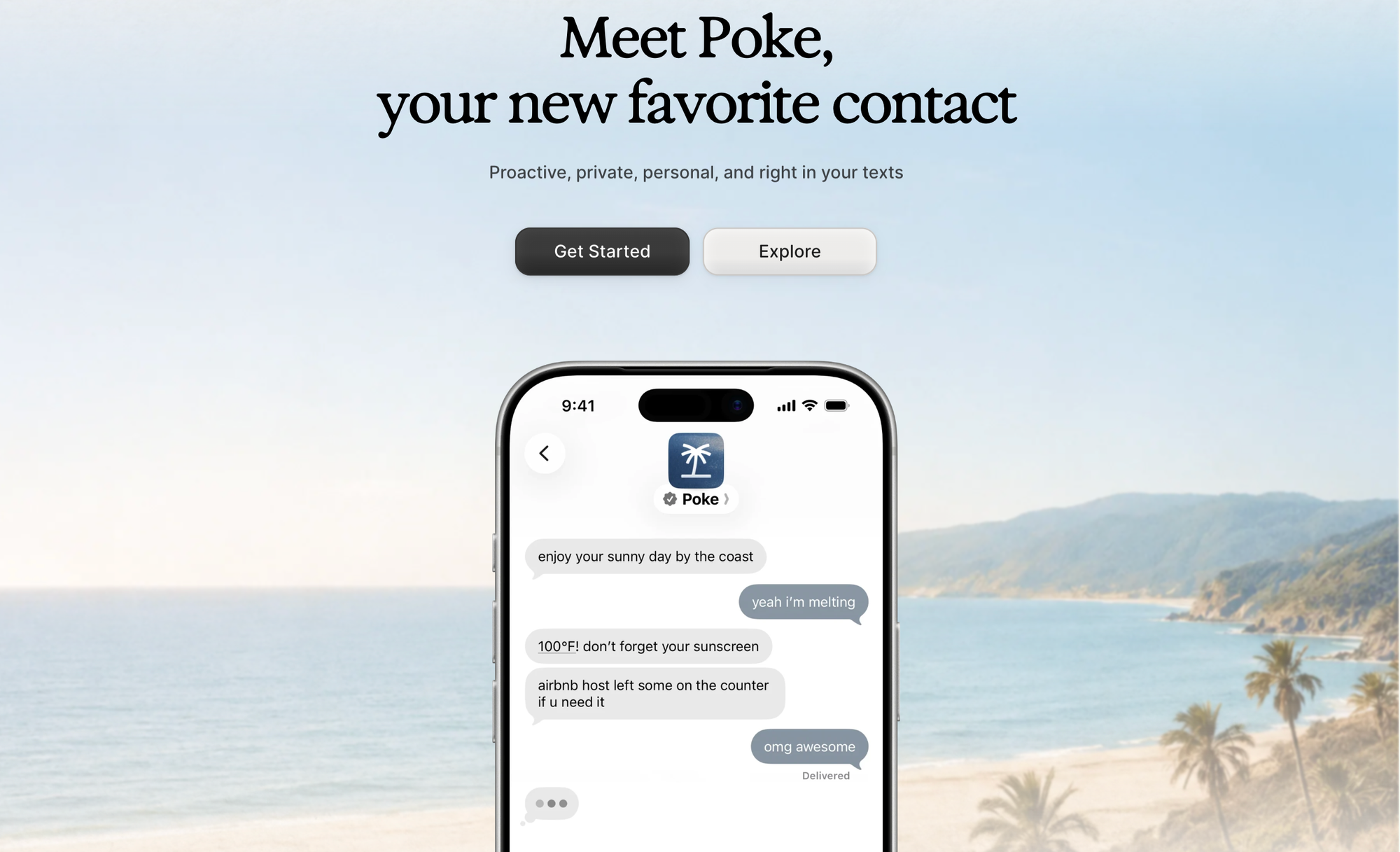
Why it's a real Muse alternative: it's the closest thing to Muse's "does real things across your real accounts" promise
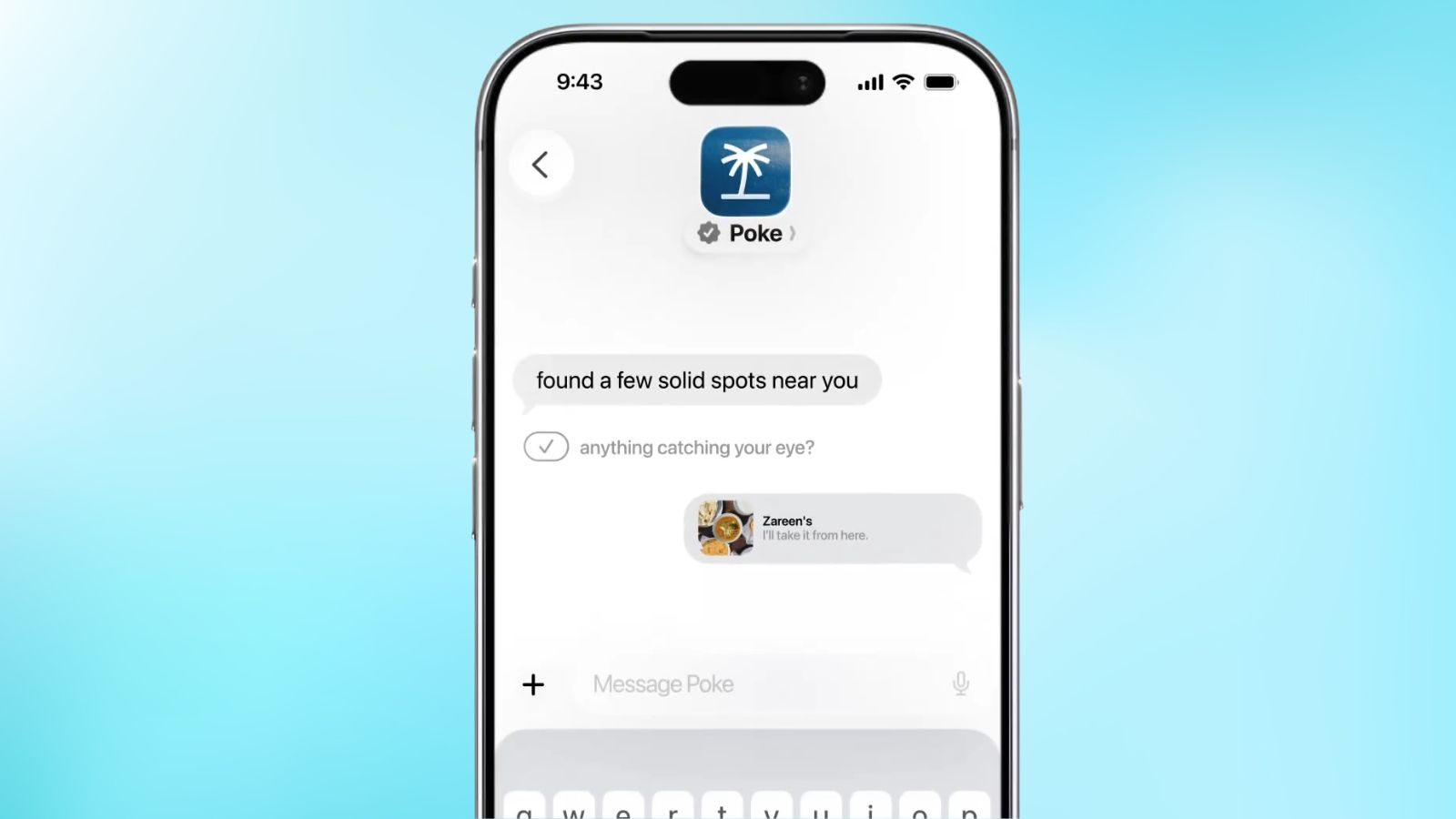
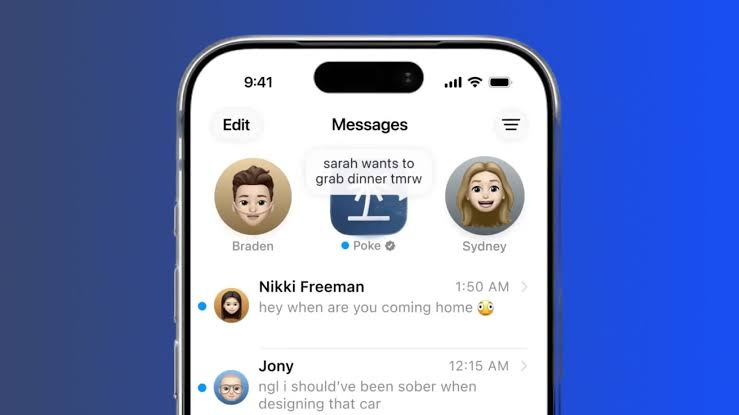
Poke, built by The Interaction Company of California in Palo Alto, lives entirely inside iMessage, SMS, WhatsApp, and Telegram. There's no app. You give it your phone number, connect Gmail or Outlook plus your calendar, and it drafts and sends replies, reschedules meetings, flags invoices, and texts you first when something needs attention. You describe automations in plain language ("tell me if anything from my landlord lands") and it assembles them.
In July 2026 it was acquired by Cognition, the Devin company, in a deal reported in the low nine figures. It's SOC-2 and CASA Tier-2 compliant
Where it's good:
- Best-in-class last mile. When something needs your attention, the way it tells you is excellent.
- Routes each task to whichever model suits it rather than being locked to one provider
- Recipes and MCP support mean you can extend it with your own tools, and there's a community marketplace for that
Where it falls short:
- Strong at telling you things, weaker at knowing what's worth telling you and holding onto decisions you made last week. Notification channel, not a memory system.
- The free tier runs dry fast.
- Acquisition uncertainty. Poke runs unchanged through end of 2026, with Cognition models due behind some tasks from 2027. That's a known unknown.
- No working interface like Saner.ai - so you have to work from a chat
Pricing: Free Forever tier. Pro $19/month ($16 billed yearly). Ultra $199/month.
Best for: People who live in their messages, have an inbox problem rather than a memory problem, and want fewer screens rather than a better dashboard.
What is not a Muse alternative, despite what you'll read
This is the part I want you to know, because it'll save you time.
Vellum shows up at #1 on an enormous number of "best alternatives" pages. Why? because Vellum publishes those pages. Its own blog carries best-alternatives posts for Zo Computer, AnythingLLM, Google Gemini, personal AI assistants generally, and Vellum ranks first on all of them. A vendor ranking itself first across every comparison it authors isn't evidence of anything. It's a press release guys

Zo Computer is a interesting product that isn't in this category. It's a personal cloud computer: a persistent Linux server with storage, hosting, and an AI layer on top. If you want to host a side project and run scheduled automations, look at it seriously. But "always-on server with AI attached" and "assistant that knows your life and messages you first" are different products solving different problems. It lands on Muse alternative lists because it's adjacent and new, not because it replaces anything Muse does.
Martin: I checked the team: Martin's founders, Dawson Chen and Ethan Hou, have moved the company to a different product entirely: Letterbook, an AI customer support platform, same YC S23 batch, same two people. On their own company profile they now describe Martin in the past tense as "our last product." Dawson's LinkedIn headline and X bio both read Letterbook now, not Martin.
If you're evaluating a personal assistant you'd hand your inbox and calendar to, and the founding team's attention is demonstrably somewhere else. Weigh that before you connect your Gmail
Carly has the same structural problem as Vellum, more so. A large share of the Tomo, Martin comparison content circulating right now is published on Carly's own blog, and it consistently concludes that Carly does the real work while the competitor merely coaches you. But they are really new, no track record, and only rank because they publish like 20 SEO posts/week 🤣
So which Muse AI alternatives should you pick
Honestly, the question isn't which is best, it's which bottleneck is yours:
- Things are just overwhelmed in your head → Saner.ai
- Things get written down and then ignored → Tomo
- Things are fine, your inbox is on fire → Poke
If you can't tell which one you are, start with the free tiers. Saner's is the most generous of the three, Poke's is real but runs out quickly, and Tomo's removes the proactive texting in its free tier, so treat that one as a demo rather than a trial.
And none of these are Muse. Muse is a bet that one company should run your entire digital life from a cloud VM it controls. Well, Meta makes that bet and sometimes, I'm concerned about that

FAQ
Is Muse available yet? Meta began rolling Muse out on iOS, Android, and muse.ai the week of September 8, 2026, starting with US users, with AI glasses support planned.
Can any of these buy things for me like Muse can? No, and that's deliberate on all three. None of them browse the web autonomously or make purchases. They focus on capture, accountability, and inbox execution, which is where most people's actual friction sits.
Is it safe to connect my email and calendar to these? It depends on the vendor, not on the category. Poke publishes SOC-2 and CASA Tier-2 compliance, which is a concrete signal. For the others, read the privacy documentation before granting OAuth access, and remember that revoking access later is done in your Google or Microsoft account settings, not just by deleting the app.
Can I use two of them together? Well, it depends on you lol
Part of our AI Personal Assistant coverage. See also best AI apps to stay on top of everything at work.